Several people have asked us how to understand the U.S. intervention in Venezuela and what it could mean for the economy and for Quebec businesses. One useful way to look at it is to go beyond politics alone and consider a factor that is often underestimated: energy.
For years, Jean-Marc Jancovici has emphasized the close relationship between global economic activity and the physical consumption of energy, particularly oil. His work highlights a strong historical correlation between oil consumption volumes and global GDP, while the price of oil has a much less direct relationship with economic activity. Oil remains central to global transportation and, by extension, to the functioning of a highly interconnected world economy.
This dependence becomes even more important when we look at the supply side. In a September 2025 analysis covering roughly 15,000 oil and gas fields, the International Energy Agency estimated that close to 90% of annual upstream investment since 2019 has been required simply to offset declining production from existing fields. The IEA also noted that decline rates have accelerated as production has shifted toward shale oil and deepwater resources.
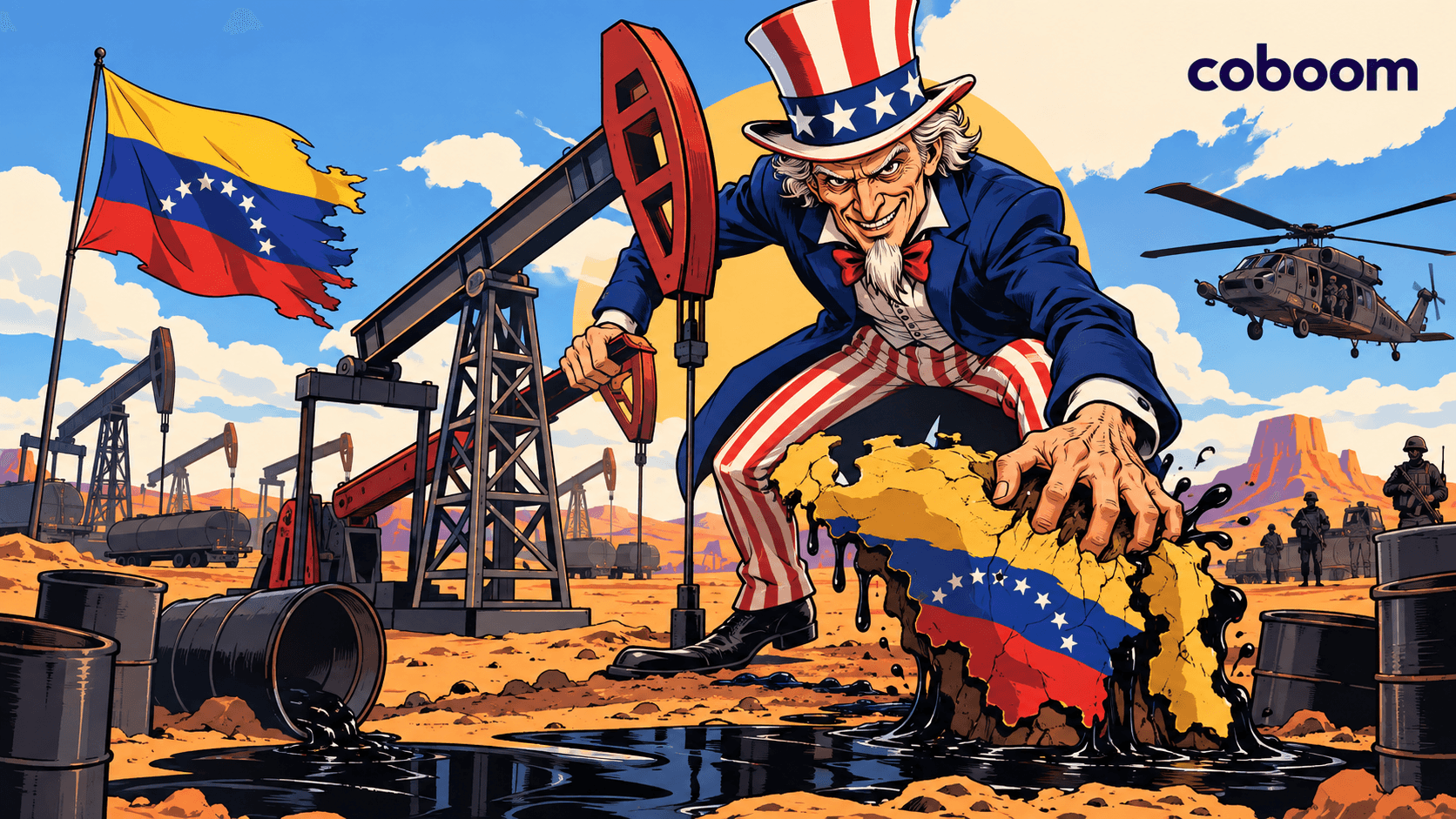
That helps explain why access to energy resources remains a major strategic issue. The United States intervened militarily in Venezuela in January 2026 and captured Nicolás Maduro, an operation whose legality under international law was widely disputed. Since then, Washington has also sought greater U.S. access to Venezuela’s oil and mineral resources.
It would be too simplistic, however, to claim that energy alone explains the intervention. The U.S. administration has pointed to issues such as drug trafficking and regional security, while other analyses emphasize geopolitical competition, Chinese influence, and access to strategic resources. What matters for us is the broader point: in a world where energy remains essential to economic and military power, securing access to supply is once again becoming a central concern for governments.
This is also where Nate Hagens’ work offers a useful framework. His approach focuses on how societies organize their economies around access to energy and how they seek to maintain enough energy throughput to support increasingly complex systems. As those flows become more expensive, harder to replace, or more exposed to geopolitical risk, securing them becomes more strategic.
For Quebec businesses, the implications go far beyond the oil sector. Harder-to-secure energy supplies, intensifying geopolitical tensions, and greater fragmentation in global trade can all translate into more volatility, less predictable costs, and more fragile supply-chain dependencies.
The strategic question is therefore no longer only how to grow. It is also how to remain viable when energy, raw materials, and market access become less predictable.
In that environment, clear-eyed thinking becomes a competitive advantage. Companies that map their dependencies, diversify supply sources, reduce energy exposure, and preserve room to manoeuvre will have more options to maintain, adapt, or transform their business model as conditions change.