In our recent posts, we have discussed the weakening foundations of our economy and socioecological systems. One mechanism makes this degradation even more dangerous: our ability to get used to it until it feels normal.
Sociologists call this the shifting baseline syndrome. Each generation takes the world it inherits as its reference point, while the losses that occurred before it was born gradually disappear from our collective memory.
The WWF’s 2024 report estimates that monitored wildlife populations have declined by an average of 73% since 1970. In just over half a century, the abundance of life around us has collapsed at a staggering pace.
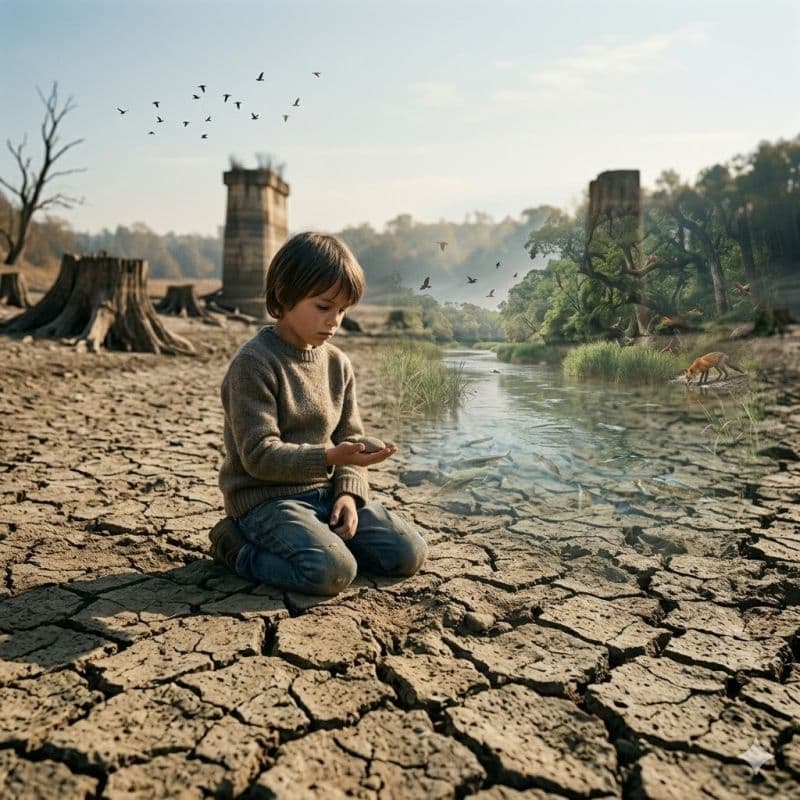
Yet this catastrophe remains abstract for much of the population. Many people were not alive in 1970, while others watched wildlife decline year after year, slowly enough for each new loss to blend into the background.
For a child born today, this diminished world is the starting point. Quieter forests, depleted oceans, and a destabilized climate become normal, while an even more degraded world risks becoming normal for their own children.
That is the power of shifting baselines. Degradation advances through a succession of small losses until yesterday’s exception becomes today’s normal.
We learn to live with less biodiversity, less climate stability, less quality, less economic security, and less collective hope. Then we dress that regression up with reassuring words like adaptation and resilience.
At our conferences, we regularly hear that humanity has always adapted and always will. This belief turns habituation to degradation into a virtue and makes every decline easier to accept as the new starting point.
The same phenomenon is eating away at our economy. Our infrastructure is aging, public and private services are deteriorating, quality is declining, products last less time, debt has become structural, and inequality continues to grow.
As we learn to live with these cracks, we build them into our expectations. Every setback lowers the baseline and makes the next one easier to accept.
At Coboom, we are choosing a different trajectory. We look degradation in the face, measure what has been lost, and rebuild our ambitions around what we intend to preserve for future generations.
Martial arts teach that a purely defensive posture eventually leads to exhaustion. A robust strategy means taking back the initiative, protecting what matters, and acting before our room to maneuver disappears.
The trajectory is demanding, and it is clear. We must drastically reduce our consumption of energy and materials, collectively and individually, while protecting ecosystems and every form of life our economy depends on.
We can keep lowering the baseline until impoverishment feels normal, or we can raise our ambitions. At Coboom, our direction can be summed up in a few words: “Less consumption, more life and meaning.”