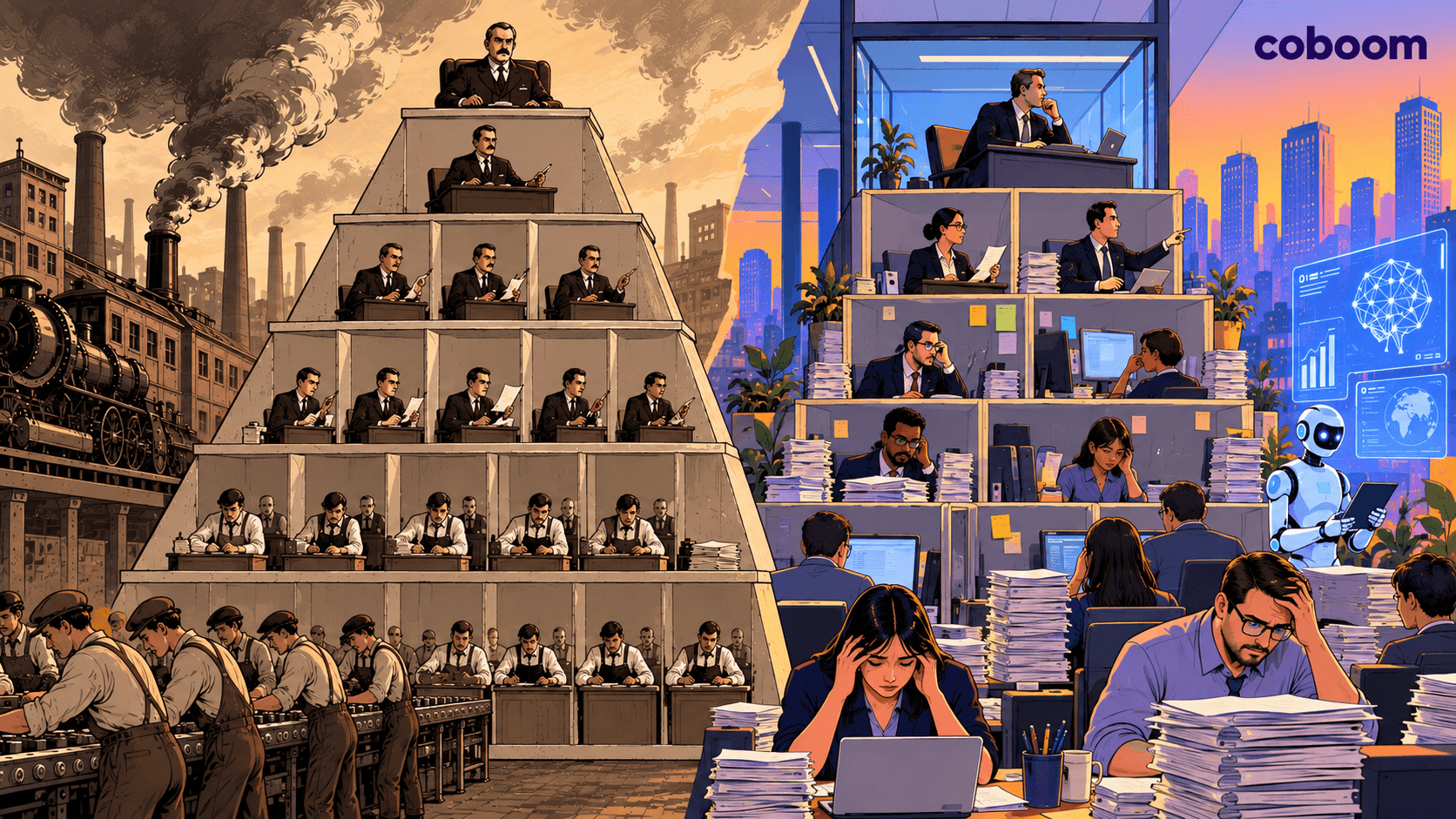
As AI accelerates, some predict massive job destruction while others point out that every industrial revolution eventually created more jobs than it destroyed. Both can be right, but not at the same time.
Job destruction happens fast, while job creation unfolds over decades. That timing gap is what turns every industrial revolution into a social shock before it becomes a new engine of economic growth.
The First Industrial Revolution, which began in England around 1760, mechanized artisanal work and wiped out tens of thousands of skilled trades across Europe and North America. The economy eventually created new industrial jobs, but only after 40 to 60 years marked by poverty, riots, and deep social fractures.
The Second Industrial Revolution transformed agriculture and accelerated the decline of artisanal work. Around 1870, nearly one worker in two made a living from the land, but that share collapsed over the following decades as urban industry absorbed the displaced workforce at the cost of years of social tension and widening inequality.
The Third Industrial Revolution, driven by computing and hyperglobalization beginning in the 1970s, eliminated millions of industrial jobs across Europe and North America between 1980 and 2010. Entire regions lost their industrial base and never fully recovered, while new jobs emerged elsewhere, often in lower-cost countries and under less favorable conditions.
We are now entering the Fourth Industrial Revolution: AI. This time, the machine is no longer targeting only physical labor. It is coming directly for knowledge work.
Even cautious scenarios suggest that up to 30% of white-collar jobs could be at risk by 2030. On February 26, U.S. payments company Block cut 40% of its workforce, roughly 4,000 people, while placing AI at the center of its new operating model.
The movement is underway, and technology, finance, professional services, and administrative functions are among the first lines of impact. A growing share of knowledge work will be automated, fragmented, or transferred to systems capable of performing in seconds what once required hours of human labor.
The optimists overlook two historical realities. Employment recovery cycles have taken 30, 40, and sometimes 60 years, nearly an entire working life, and those decades of transition disrupted millions of lives.
They also overlook the fact that a job that disappears does not come back in another form for the same person. New jobs emerge elsewhere, requiring different skills, in different industries, and often for a different generation.
The history of industrial revolutions is unforgiving: we have never been able to stop innovation, whether it produces progress or damage. Clear-eyed strategy means facing that reality and preparing people, businesses, and communities before the shock reaches them.
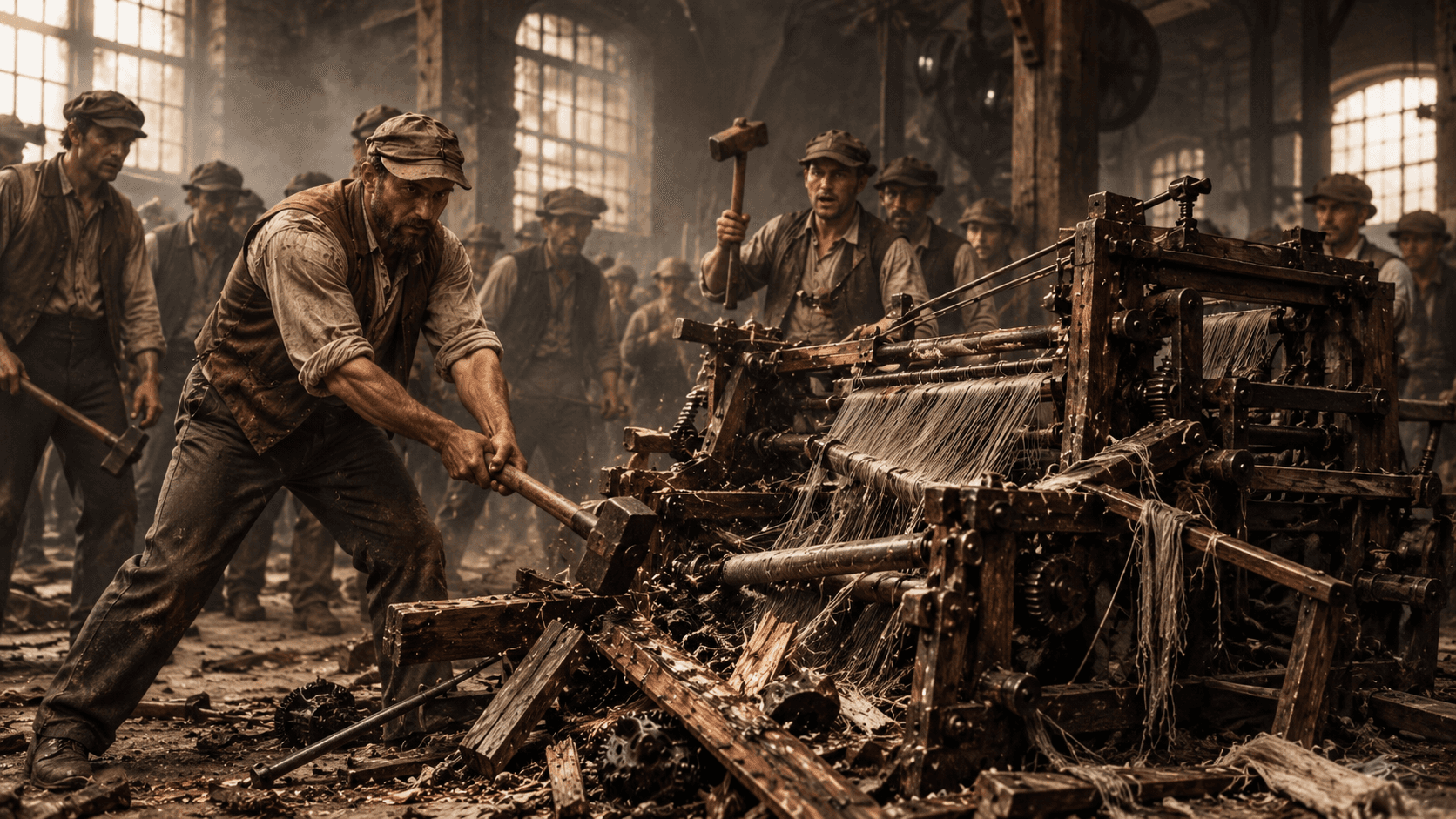
This debate is more than two centuries old. Between 1811 and 1816, English workers known as Luddites destroyed mechanized looms that were replacing their labor, becoming some of the first visible victims of an industrial revolution transforming their work, income, and place in society.
Two centuries later, the machine has changed targets. It is no longer replacing only our muscles. It is moving into intellectual work.
And if you are on LinkedIn, you are probably part of the workforce most exposed to this Fourth Industrial Revolution. This time, white-collar workers are not watching the transformation from the sidelines. They are on the field.