An old legend tells of a king who, impressed by the invention of chess, offered its creator any reward he wanted. The inventor asked for one grain of rice on the first square of the chessboard, then twice as much on each following square. The king agreed, amused by what seemed like a trivial request.
The first squares seemed to prove him right: 1 grain, then 2, 4, 8, 16, 32, 64. Almost nothing happens at first, then the quantities explode because every increase is applied to an amount that is already larger. That is exponential growth.
This legend looks remarkably similar to our economic model. Political and economic leaders still treat annual GDP growth of around 3% as normal, year after year, without seriously questioning whether that trajectory is physically possible.
In a spreadsheet, 3% looks harmless. But 3% is not added each year to an economy of the same size. It is added to an economy that was already larger the year before, which means the economy roughly doubles every 24 years and becomes nearly 19 times larger over a century.
Think about what that means in the real world. An economy almost twenty times larger must produce, transport, build, and consume at a scale completely unlike today’s, while drawing from the same planet.
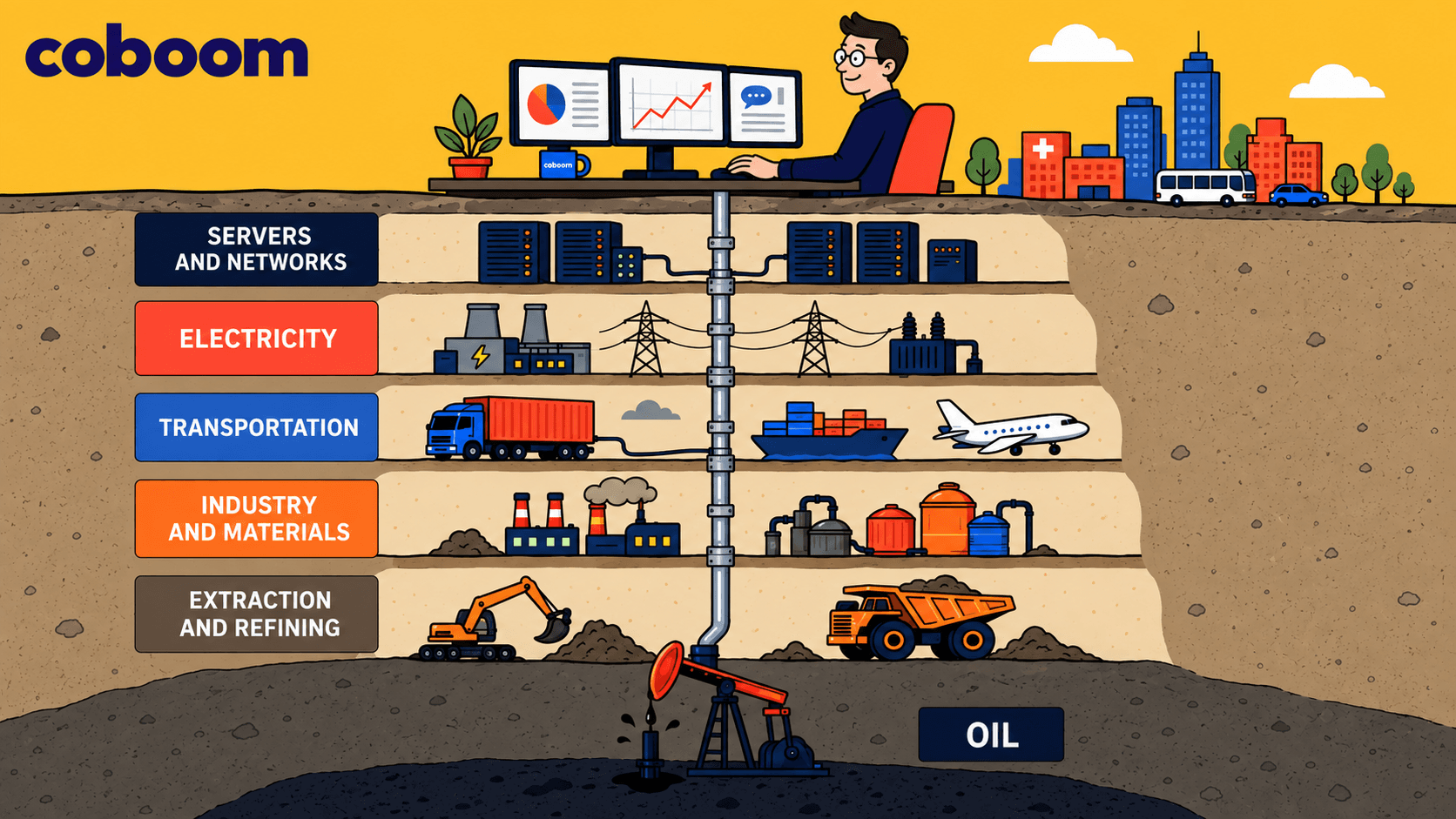
That is where the physical world catches up with economic models. Growth requires energy, materials, infrastructure, and ecosystems capable of absorbing our waste, while the Jevons paradox shows how efficiency gains can drive more consumption instead of reducing total resource use.
Absolute decoupling at the global scale, green technologies, sustainable finance, and sustainable development are still too often used to preserve the idea that this trajectory can continue. Meanwhile, seven of the nine planetary boundaries that define the conditions supporting human life have already been breached.
Since the postwar boom, we have watched the first squares of the chessboard fill and concluded that the system worked. Energy was abundant, resources were accessible, infrastructure was new, and ecological margins were far greater.
We are now moving into the squares where the quantities become enormous. Every new increment of growth is applied to an economy that is already massive, while resources become harder to access, infrastructure ages, and ecosystems continue to deteriorate.
The problem goes beyond quantity. GDP adds up monetary activity without distinguishing between what genuinely improves quality of life and what simply repairs damage created by the system.
Rebuilding after a disaster, treating illnesses linked to pollution, or replacing products designed to fail prematurely all increase GDP. Preventing damage, caring for a family member, or preserving an ecosystem can create immense value while barely registering in that measure.
We have therefore built our economic compass around an activity indicator that we then demand must grow exponentially. We do this inside a physical world governed by biophysical limits that are completely indifferent to our growth targets.
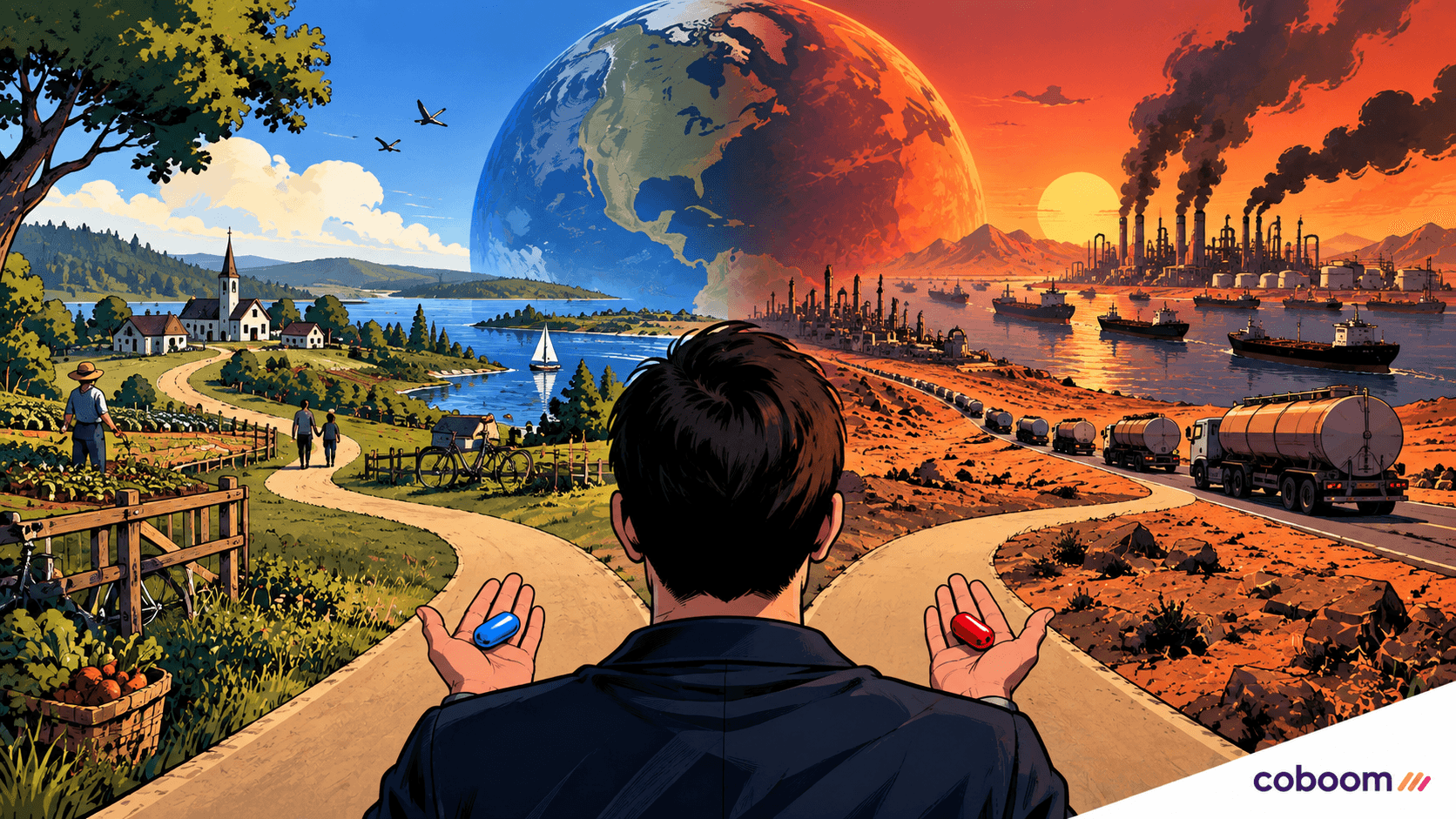
Economic development in the 21st century now requires hard choices. We must decide what to maintain, what to adapt, what to develop, and above all, what to abandon.
Continuing to fill the squares as if the chessboard were infinite means letting the growth dynamic make those choices for us. The condition of our public infrastructure already exposes the absurdity of the model: we keep promising more while struggling to maintain what we have already built.