On June 24, Quebec’s National Holiday, we believe Quebec already has much of the knowledge, resources, and capabilities needed to collectively build a fifth socioeconomic revolution. What we still need most is the courage to rethink political and economic models that are becoming less suited to the world ahead.
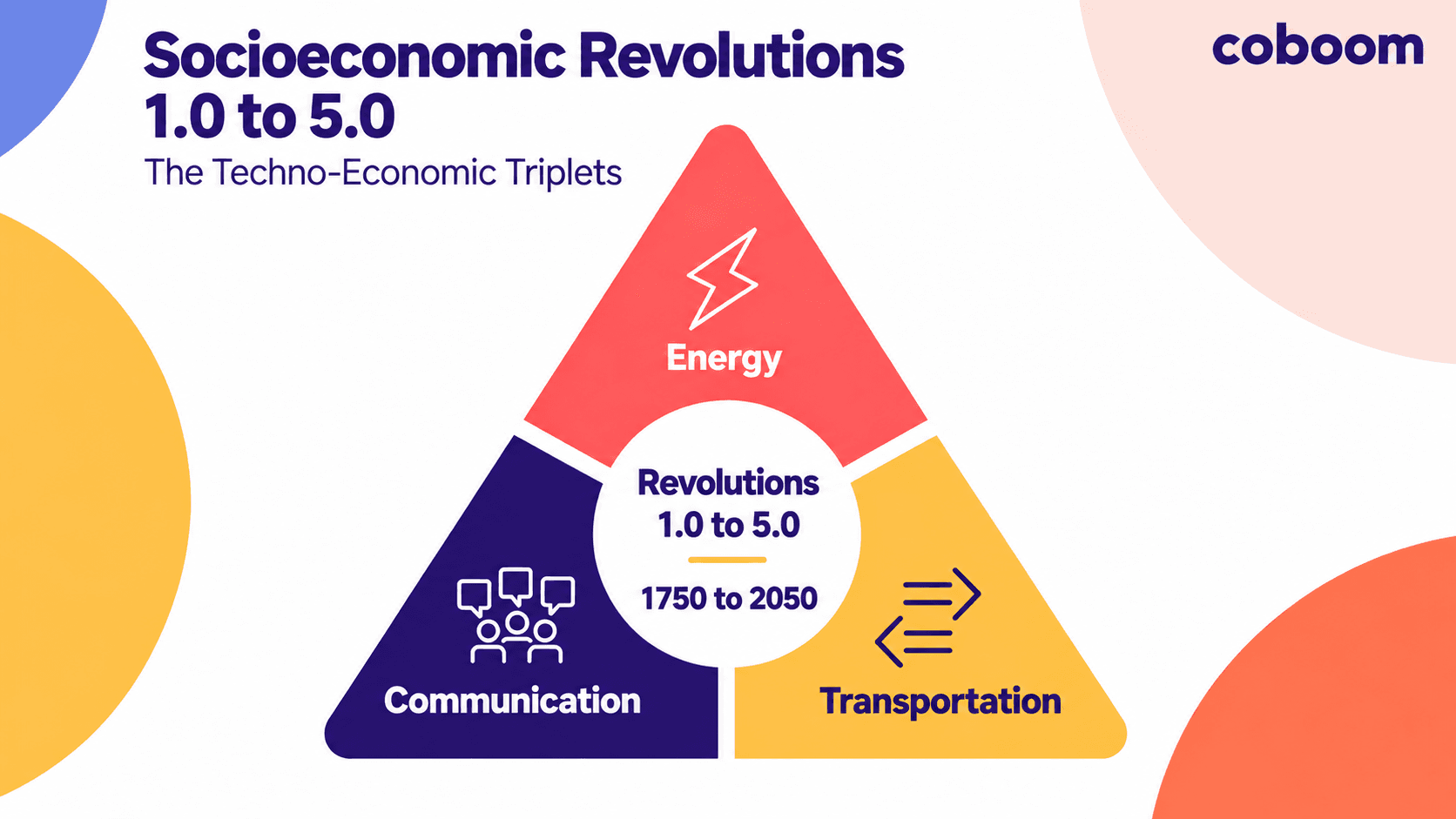
Throughout history, major socioeconomic transformations have never been driven by a single new technology. They emerge when major innovations reinforce one another across three fundamental pillars: energy, transportation, and communication. These socioeconomic “triplets” eventually reshape business models, production systems, the creation of wealth, and the dominant economic players.
Since the mid-18th century, four major revolutions and evolutions have profoundly transformed our societies. Each time, a new balance between energy, transportation, and communication enabled a major shift. Today, we are still immersed in Evolution 4.0, the digital society.
This evolution has placed data at the heart of value creation and generated major gains in speed, agility, and analytical capacity. It has also supported the rise of technology giants such as Google, Apple, Meta, Amazon, and Microsoft, while making technology entrepreneurs some of the most influential economic figures of our time. With artificial intelligence, automation that once focused mainly on manual work is now rapidly extending into knowledge work.
Yet what we are experiencing is still more of a technological acceleration than a true systemic transformation. Renewable energy is expanding, but the global economy remains heavily dependent on oil and gas. In transportation, no breakthrough comparable to railways, automobiles, or commercial aviation has fundamentally redefined our systems in decades. And within companies, advanced digital technologies still often coexist with organizational structures inherited from the early 20th century: rigid hierarchies, functional silos, highly specialized roles, and local optimization at the expense of the system as a whole.
The result is paradoxical. We have access to increasingly powerful technologies, yet productivity remains difficult to improve, economic growth is losing momentum, and many companies are struggling to renew their business models in response to major economic, energy, social, geopolitical, and ecological trends.
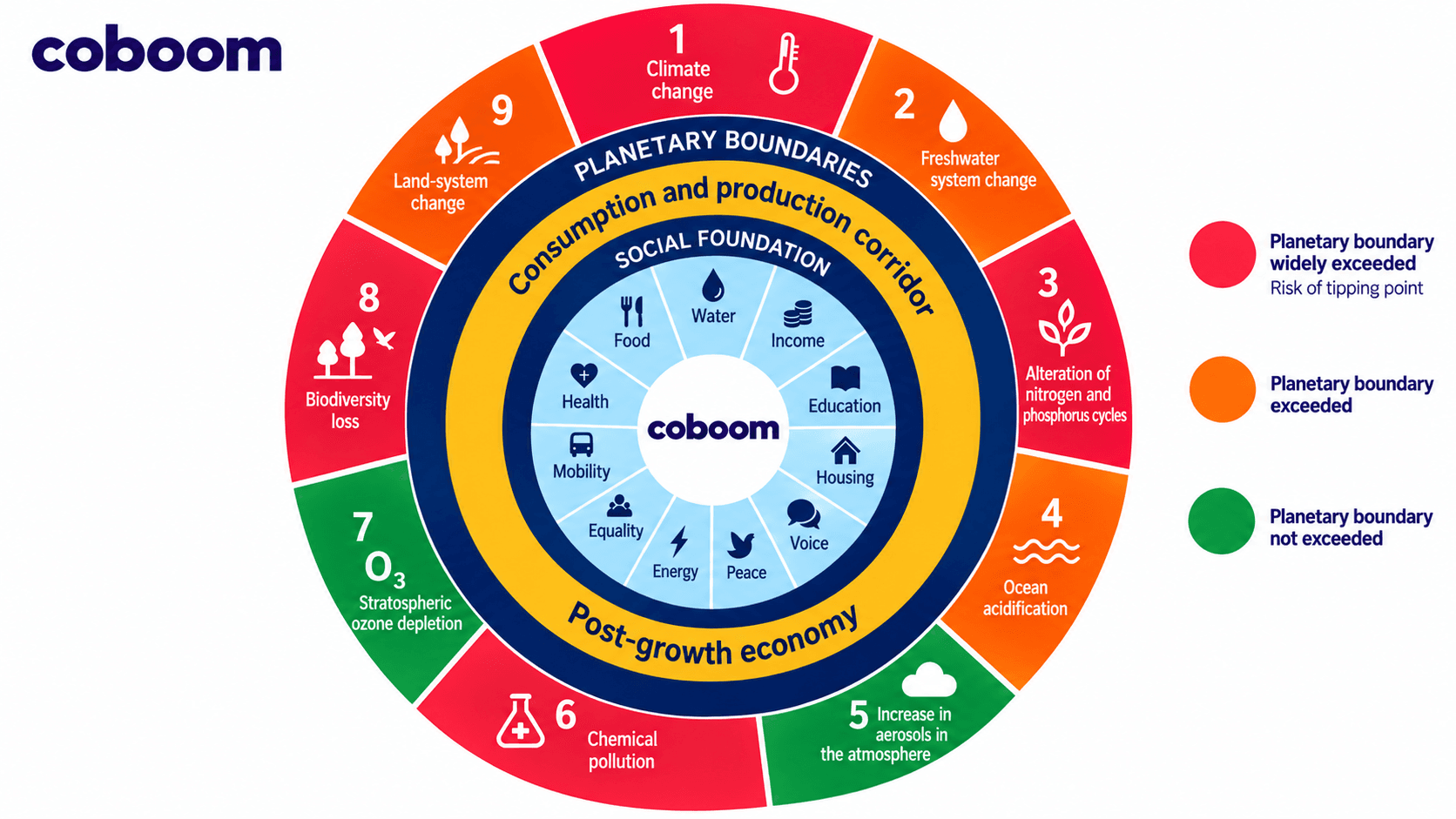
A fifth socioeconomic revolution may now be beginning to emerge. It could be less technologically spectacular, but far more profound in its consequences: a more regionalized post-growth economy, a renewed value placed on manual and relational work, shorter supply chains, fewer critical dependencies, and a better reconciliation between the economy, society, and ecological limits.
This revolution would no longer focus only on producing more, faster, and at lower cost. It would instead ask what we need to maintain, adapt, develop, and sometimes let go of in order to build more robust companies, municipalities, and a more robust Quebec economy.
On this June 24, perhaps one of our greatest collective opportunities is precisely this: to master Evolution 4.0 rather than simply be shaped by it, and to use our resources, energy, territory, and collective intelligence to build a more robust Quebec for the next seven generations.